Monthly Archives: April 2014

What I Believe: Embracing a Bigger Gospel

This is a record. I have never spent so much time, so much energy, so many words on a single blog post. Thus far, I have written 2 complete drafts, only to scrap them entirely and start again.

I had promised another edition of my What I Believe series (where I broke up with my church and decided I’m not sure of anything), to whoever might still be interested in my post-evangelical philosophies (concerned family and new church friends mostly).

The first one I crafted was full of scripture references, arguments and intellectual debate. Like I’d  been taught. A gospel staked out in careful boundaries, defensible territory against the attack, with a few darts strategically thrown at the theology I once called home. A gospel of knowing.

The second swung the other way entirely – a way we’ve only recently embraced. Apologizing for the years I believed that I (and those like me) cornered the market on truth. Offering questions in place of answers. Exploring a God who reveals himself through a bigger story, defying simplistic outlines and smug certainties. A gospel of not-knowing.

The truth is, I find myself somewhere in the middle. I wish I had the wisdom, ability and time to properly express the flavour and freedom of this knowing-but-not-knowing journey we’re on (no doubt this sounds utterly absurd to many of you – it certainly would’ve to me, until recently). We are Christians, but not the way we used to be.

The gospel I once knew

In this context I’m using the term “gospel” to refer to an overarching central truth, specifically as it relates to the purpose and message of Christianity. It is used interchangeably in many churches with the phrase “the Good News.”

hellThe gospel I have believed most of my life goes something like this: God created humanity, but we rejected him (sin) and are as a result condemned to an eternity of punishment (hell), but God loved his wayward creation, so He sent his own Son (Jesus) to become human and take that punishment on himself (dying on the cross and rising again), now everyone who consciously chooses to believe this gospel (usually praying a prayer or having a spiritual experience) and live a Jesus honouring life (not as a prerequisite for, but as an inevitable proof of your sincerity) will become favoured children of God and eventually escape punishment.

This belief was the filter through which I understood the bible and the world around me. It was the motivation, sometimes inspiration and sometimes guilt, behind most of our life decisions. In theory, all evangelicals consider themselves missionaries. We wanted as many people as possible to know God and escape an eternity of brutal torture (and we would have been evil schmucks if we didn’t). It’s hard for people outside this paradigm to fully appreciate how all consuming this worldview is.

We all filter

A few years ago, a close relative of mine decided that there were only 7 righteous people left in the world (including him). Because that’s what the bible said. To him. He believed it sincerely, and everything he read in scripture and saw in the world only confirmed this further. It was his filter.

It seemed clear to us that he wasn’t thinking straight. This was not logical, nor was it an historically acceptable interpretation. But it seemed evident to him.

It’s entirely human to see what we want, what we expect. This is how we make sense of the world. It’s how our brains work. And we all do it.

Christian Smith describes this phenomenon when it comes to understanding the Bible as putting a puzzle together. Whatever picture you see on the box, that’s how you fit the pieces together. Some pictures (systems of belief) fit better than others and are more widely accepted, but there are always a few pieces that don’t work as well. We filter those through the words and ideas that seem more important, more central to our big picture, whatever that happens to be.

The picture on the box

My own experiences and interpretations of the Bible, of nature, and the still, small voice in my heart give me insight, but as a human being I can be misled, mistaken and willfully obtuse. History shows that the whole of the Christian church has been misled, mistaken and willfully obtuse over the years, on many issues.

But faith is not about perfect understanding or certainty, it’s choosing a confident hope. I still believe. I believe that a loving God created the world and redeemed it through Jesus Christ. I believe this powerful grace stretches farther and wider and deeper than I ever imagined.faith-hope-love

This is the good news I embrace. A gospel where love has the final word; where Christ’s sacrifice to redeem all humanity is powerful enough to do just that. The picture I see is one of “Ultimate Redemption” – that while there will be judgment and may be punishment, in the end, all will have a clear understanding and ultimately be reconciled to God. To me, this picture better reflects the overarching story of a broken world and a loving Messiah than an extremely limited redemption of those who adhere to a certain theology, say the right words in the right order (sinners prayer) or live a certain lifestyle… most of whom are born in a specific time and place where this is a cultural inevitability.

There is a surprisingly strong scriptural basis for universal reconciliation (which has many different forms). It’s not simply wishful thinking. It’s not even a stretch. Some of the key bible verses are: Galatians, John 12:32, Acts 3:21, Romans 5:18-21, 1 Cor 3:12-15, 15:22-28, 2 Cor 5:19, Eph 1:10, Phil 2:9-11, Col 1:20, 1 Tim 2:14, Titus 2:11, 2 Peter 3:9, 1 John 2:2 – for a more thorough explanation of this picture: http://pantheon.yale.edu/~kd47/univ.htm.

This is not a new position. Historically it falls within the orthodoxy of Christianity, though some modern evangelicals like to believe otherwise. Even Gregory of Nyssa, who edited the Nicene creed (which is widely accepted as the most basic definition of Christian orthodoxy) taught this, along with several other significant fathers of the early church.

Final word to Jesus

When Jesus taught about the Kingdom of God, he didn’t diagram, or alliterate, or clearly outline the steps to get in – instead he told stories. “The kingdom of God is like this…” he would say. Telling ridiculous stories about a love that defies the rules, that was, and is still today, a scandal to good, moral people.

Jesus declared freedom to the oppressed, an end to the Law and an inclusive grace. This is the picture I see now, and it fits. I’m trading in systems of sin management, a focus on who’s in and who’s out, a fear-driven and defensive perspective – for freedom. To trust that Jesus has both the power and the will to reconcile all things to himself. To extend the same unconditional love to others without agenda (which sounds pretty, but can actually be very uncomfortable). To see that there is more to truth and to life than my own perspective – but all truth is God’s truth, so this is nothing to fear.

The kingdom of God is like this: we need, God provides.

For God was pleased to have all his fullness dwell in [Jesus],
and through him to reconcile to himself all things,
whether things on earth or things in heaven,
by making peace through his blood,
shed on the cross.
Colossians 1:19-20

So here’s me, embracing a new picture of God and the world around me.

Stay tuned for my final installment:
What is a Progressive Christian Anyway?
Why I support feminists, gays, tree-huggers and other crazy liberals Mark Driscoll has been warning you about.


How to Make a Real Live Friend

It starts with my best face, my best chit chat, my best me. A brief warmth and pressure, hands touching, nothing more. Tentative, sanitized, easy.

Next, we test the waters. Lining up topics from lightest to heaviest. Basic information with hints of personality. I don’t always follow the rules, I overshare, I talk too much and listen too little. Did you really want to know about my day? Did I really want to know about yours?

If all goes well and life allows, we invest something. Some time. Some memory. Some effort. Venturing onto private property, dishes in the sink, lego on the floor… I’ll show you mine, if you show me yours.

Time is the final ingredient. The yeast in the dough. Settling in, getting messy, sticking it out for the hard stuff. I’ll show you me, if you let me see you.

It’s not like it used to be. When “wanna be my friend?” wasn’t quite so complicated. When clicking “confirm” didn’t mean anything.thumbs up

So here’s me, where making friends at 38 is different for a whole lot of reasons, but definitely worth the effort.

Today I’m joining Lisa Jo Baker‘s
Five Minute Friday writing challenge on the word:
Friend

5minutefriday


The Marriage of Two Minds

The challenge: “Tell a story, in 50 words or less.”

“Opposites attract!” friends quipped.

He, drawn like a moth to a flame, warmed to her vivacity, sparks of passion and life. She, lured by his depth, quenched herself with serene and steady.

Inevitably, her words burn and his silence douses. Opposite becomes opposition. Coexistence, a chore.

So they become something new.

Together.

fire and water

So here’s my verse for the Word Press Writing Challenge:Fifty http://dailypost.wordpress.com/2014/04/07/writing-challenge-fifty/
That was easier said than done.

The title of this piece is a play on Sonnet 116 by William Shakespeare. It’s one of my favourite poems, a tribute to timeless, unfailing love. Although love itself must never alter or compromise, we must if relationships are to endure. Not entirely, not unilaterally, but in little ways every day.

Let me not to the marriage of true minds
Admit impediments.
Love is not love
Which alters when it alteration finds,
Or bends with the remover to remove:
O, no! it is an ever-fixed mark,
That looks on tempests and is never shaken;
It is the star to every wandering bark,
Whose worth’s unknown, although his height be taken.
Love’s not Time’s fool, though rosy lips and cheeks
Within his bending sickle’s compass come;
Love alters not with his brief hours and weeks,
But bears it out even to the edge of doom.
If this be error and upon me proved,
I never writ, nor no man ever loved.


The Stranger: A Short Story

Somewhere between fact and fiction lies this story.

My trip down memory lane this summer has sixteen lanes of traffic, on both sides. Interstate 5 stretches all the way from Canada to Southern California and it’s a road I know well. At every stop on this familiar road trip, I’ve been reading and re-reading an article written by Martha Gellhorn, about her memories of World War II. She was front and centre at some of the pivotal points in history, yet 50 years later she’s struggling to make sense of it all. With her memory fading, the coherence and purpose she once had now elude her. It’s frustrating as hell. How do we make sense of the world when we can’t make sense of ourselves anymore?

As I muscle my way across the lanes of traffic onto my exit, I try to focus on the mission at hand. This is difficult under a deluge of my own memories. I spent many blistering summers here in Eagle Rock, a relatively affluent suburb of Los Angeles. My holidays were punctuated by trips to the library, to the beach, to church, and to buy household items and underwear with Grandma at the Glendale Galleria (which sounded SO much more glamorous to my childish ears than “mall”). Occasionally, a longsuffering relative would bundle some of us kids off to Knott’s Berry Farm or, on a really good day, Disneyland.

I angle my wheels toward the curb and pull on the parking brake, before clambering out with an armful of bags and papers and empty soda cans. I once tried to roller skate down this very street with my cousin Janis. Lined with palm trees, Hermosa Drive is just as picturesque as I remember, but seems even steeper and more dangerous to my adult eyes. What were we thinking?

But today isn’t a holiday. Nor is it time to wallow in nostalgia. Today, I’m here to work, reviving an old skill set for an important man. It’s been years since I coddled, cajoled and provided personal care to several elderly clients. It wasn’t a job I loved at the time, but it feels important in hindsight. At least I know what I’m doing.

The white house halfway up the block is a poor man’s Georgian mansion. What it lacks in size, and adjoining plantation, it makes up for in sheer panache. The four towering pillars at the front would seem pretentious on any other façade, but this house has the supreme self-confidence to pull it off. No longer pristine, it maintains an air of shabby elegance. The extra wide front door has an antique brass knocker on its brow and I’m thrilled to announce my arrival with a brisk rat-a-tat-tat. “Simple pleasures for simple minds,” my husband always teases. When no one comes after several minutes, I’m forced to resort to the doorbell after all.house

Shifting from one foot to the other, I juggle my packages back and forth, sagging under the weight of old insecurities. As extensively as the family has briefed me on the situation there is still so much uncertainty. I’m not sure how I’ll be received.

When the door finally opens I am surprised by the blast of heat. It’s even hotter inside than out. An industrious Mexican woman greets me before bustling past.

“I will see you next week SeñorBob,” she calls over her shoulder.

The Señor is enthroned in a frayed green armchair on the other side of the room. Straight-backed, legs planted wide, with a cane in his hand like a sceptre, he scowls over the coffee table at me.

“Well… you gonna come in, or what?”

I’ve never encountered a more intimidating stranger.

I try to ease the heavy door shut, but the hot Santa Ana wind wrestles it out of my grasp with a resounding bang. I take a deep breath and paste a smile on my face. The key to confidence is: fake it ‘til you make it. I’ll pretend he’s glad to see me.

I try to make nice; the polite chit-chat strangers use to grease the wheels of introduction. “It sure is windy. I guess they don’t call the Santa Anas “devil winds” for nothing. I thought they were going to knock me right off the road. Is it normally like this? I see they’re filming a movie in the house up the road. Do you get a lot of that around here? Have you had lunch yet?”

Smooth. Nothing says “trust me, I’m here to help” like a nervous ramble.

He’s unmoved. Not a word; just a glare.

I feel less like an intruder when I notice the food stains on his white dress shirt and catch a whiff of his scent. Unwashed Old Man will never make my top ten aromas, but today it smells like a welcome. He does need me, even if he can’t see it right now.

Putting down my things, I excuse myself to the washroom, a genteel Canadian-ism which makes him snort.

“The bathroom’s in the back. Don’t touch anything.”

The washroom’s a study in pink. Someone loved dusty rose once upon a time. Behind the toilet a faded sign, written on the cardboard sleeve salvaged from a package of pantyhose, is taped to the wall. The feminine script reads, “If it’s yellow, let it mellow. If it’s brown, flush it down.” Ah yes, the classy prose of drought country. Before I dare to let anything mellow I help myself to a rag and give the whole room a wipe-down. It’s what my Grandma used to call a “lick and a promise,” but at least it’s a start.

He’s right outside, when I’m done, leaning heavily on his cane, stooped nearly in half.

“Might as well show you around,” he snarls.

Waving his hand dismissively toward the stairs, “Bedrooms,” then nodding toward the front room, “Keep the curtains closed; we don’t want the furniture to fade.” As we inch our way through the dining room, “Fer company” is all he says. Apparently the kitchen is self-explanatory.

He lights up as he hobbles into the backyard. Rendered speechless, I’m impressed by its beauty: the charming nooks, the hidden paths to benches and bird feeders, the dramatic blooms and rustic gazebo. Then he starts talking. He shows me the system he’s rigged to open the back gate with the touch of a button. He explains the construction of each sprinkler. He points out the fruit trees and names each type of flower. Even the grass receives an extensive lecture. “St. Augustine’s the way to go. It’s not like most grass around here, but it’s tougher, better, needs less water. No weeds dare grow when it’s taken root. Ya see how low to the ground it is. It don’t grow much higher than that; it don’t need much fussin’.”

Sure enough, the grass is unlike any I’m used to. It’s prickly and barely gives way under my feet. It suits him.

He settles himself on the back patio; waiting, I assume, for his lunch. He barks out an order: “sardines and crackers.” I try not to gag as I put a tray together. Whether that’s the rather pungent main course, or my deep seated aversion to submission, I can’t tell. I don’t generally take orders well.

We sit in silence. Chewing. Eyeing each other suspiciously.

“Used to have a dog around here, a stray. Just showed up one day begging for food and wouldn’t leave. Huge slobbering mountain of a beast. Not a lick of sense. No use to no one, that mutt.”

“What did you do?” I wondered.

“Spent a fortune on him, got his shots, took him to the vet, fed him here on the patio.”

“So what did you name him?”

“Didn’t name him. He weren’t my dog. We just called him ‘Dawg.’ This one time he got hisself tangled up in some barbed wire the neighbour left out. Howled bloody murder; most awful racket I ever heard. I was in the shower at the time, but I hoofed it out here fast as I could to save ‘im. There I was, buck nekkid, trying to unravel that dumb Dawg, ‘til Doris comes screeching out, ‘Grab a towel, Pa.’”

The floodgates have opened. Suddenly, he’s talking about anything, about everything. About his wife Doris and how she was always the smart one. About “The Meeting” and serving the Good Lord and walking the straight and narrow. About his son and grandson, who lived in an RV on the driveway for more than a year. About the doctors who told them to put their daughter in an institution when she was born, and were surprised by their vehement refusal. About the time they got into the car to go on a drive and didn’t stop until Michigan.

With each mumbled story the picture of a different man emerges. He’s an old school patriarch living “in the world, but not of it;” rough around the edges, with an unexpected marshmallow center. Listening to him feels like coming home.

Sometimes he finishes a story before moving on to the next one, but not often. Sometimes he simply trails away, then jumps in with a new thought from yet another decade. His memory seems to wax and wane without conscious control.

Out of the blue, he turns to me, tapping his fingers against his brow, “I’m losing my mind, ya know.”

There’s an edge of panic to his voice, but the statement is made with complete resignation. This man, who proudly pointed out his workshop and many homemade inventions throughout the house, who spent years building his own equipment, who was the go-to handyman in every sphere, cannot fix himself. And neither can I.

Without the mask of hostility, his confusion is more pronounced. Even as he reminisced, his memories seemed to slip through his fingers no matter how tightly he grasped for them; not just what he had done, but who he was and why he was here. Gellhorn once asked, “What is the use in having lived so long, travelled so widely, listened and looked so hard, if at the end you don’t know what you know?” It’s frightening, and worst of all, so very pointless.

I came here hoping he would recognize me. I imagined a few meals and a good cleaning and a friendly face could hold back the tide of dementia a little longer. I thought that was the job. But I was wrong.

At the end, when memory fails and we can no longer make sense of our lives, it’s up to our loved ones to do it for us. That is how memory, and meaning, lasts forever. This is the job. I am here to catch those memories as they slip away and make them mean something in the world, to make HIM mean something. It’s all I can do.

I put my hand on his arm and leaned close. “Don’t worry Grandpa, I’ll remember for you.”

This piece was published in the literary magazine “Louden Singletree” under creative non-fiction. 

What began as a composite character of all the clients I once worked with who suffered from dementia, evolved into a picture of my own Grandpa, as seen through the lens of my mom and sisters, my aunts and cousins, and those last few visits we had on the back porch of the Hermosa Drive house.


The Winding Road to Baker Street: A Guest Post

Welcome to my very first Guest Post, and to sweeten the pot – a Free Prize! Everyone who leaves a comment on this post before April 10th will be entered to win an e-copy of Angela Misri‘s brilliant debut novel – Jewel of the Thames.

When I think of Angela, certain moments come to mind: my first meal of authentic Indian food, dressing up in a sari, whispering into the night and between classes about the great mysteries of life (that’s right – boys). I assumed, the way teenagers do when life is supposed to make sense and you don’t know what you don’t know, that Ang would grow up and become a writer. Of course she would. It seemed so simple.

But life is never a straight line.

So here’s Angela’s story…baker street

There are these moments that <dramatic music please> change your life forever. Christie can attest to this, she and I have shared one or two of these moments over our 20-year (!!!) friendship. These are the moments that led to Jewel of the Thames becoming a reality.

Everything changed for me one spring day in 1992 at an assembly in the gym where, as per usual, I was giggling and whispering with my friends in the audience. Suddenly my name was called by the Principal of the school and I was jostled out from the safety of the herd and to the front of the room. Having not really listened to the preceding speech, I was shocked to learn that a poem I had written as part of a school assignment had been published in an anthology of like-quality poems by Canadian children. The Principal smiled the biggest smile I had ever seen on a teacher, and handed me a copy of the coil-bound anthology, turning me back towards the audience of my schoolmates and starting the applause that followed me back to my safe haven between her best friends.

That was the moment when I discovered that despite being of Indian descent, there were in fact other options for your life’s work than medicine or engineering.

You would think that that moment would be enough to put me on the right path, but no, I struggled gamely through two years of pre-med, an MCAT and a summer dissecting cats in a neurology lab (no, really, it happened) before taking my first University-level Shakespeare course. The class was a requirement for the BSc I was clawing my way towards despite terrible grades in math and physics.

I was getting an A in the class and thoroughly enjoying it, sad that it would be ending, and sad I would be leaving my favourite teacher, Dr. Batycki when on the very last day of class she called me over. My classmates and I were lazily talking amongst ourselves about the spring and plans for the summer, so I remember feeling very comfortable and happy that day. Dr. Batycki stepped outside the classroom, holding the door open for me, and then grasping both my hands in hers, proceeded to tell me that I was a writer. No, not just a person who enjoyed reading and writing, but a person who SHOULD be writing. I of course denied it, explaining that I was going to be a doctor, that maybe someday I would write medical textbooks (my father’s suggestion when years earlier I had asked about writing as a profession) but I was not a writer – that’s just something I did for fun. She smiled at me then, and took up my hands again (which I had dropped in shock and denial) and just said it again, “You are a writer, Angela,” and then patted me on the shoulder and went back into the classroom.

That was the moment I discovered that you can deny your destiny all you want – it will, like Lady Macbeth’s spot – mark you forever to all who meet you.

Between that moment and my truly horrendous marks in math, I switched to English Literature, and excelled, moving further and taking a Masters in Journalism before my 23rd birthday. I wrote my first full-length novel in those years, a historical fiction set in 3B.C. India called ‘Savitri,’ and many poems that will never see the light of day if I have my way. I also wrote a thesis about Sherlock Holmes that would set the stage for the Portia Adams Adventures. It was a psychoanalysis of the great fictional detective in which I postulated that he was bipolar. It was incredibly fun to research and write and allowed me to read everything about Holmes and Conan-Doyle and many of the other authors who had taken to writing about the Baker Street detective since then.

You remember Galadriel’s lines at the beginning of the Lord of the Rings trilogy? “And some things that should not have been forgotten were lost. History became legend. Legend became myth. And for two and a half thousand years, the ring passed out of all knowledge.” Ok, so my writings were not lost for that long, but for almost 10 years, while I was excelling in Digital Journalism at the CBC and raising my son, I barely wrote anything that wasn’t a news story or a web documentary.

Suddenly, on a trip to San Francisco, I was so inspired by the landscape and colours of the desert that I started writing a short story in my moleskin notebook. That story grew to over 80,000 words of a time-travel novel and inspired more writing, and more poems and suddenly I was writing all the time – stopping only because my hand would cramp up around my pen. I wrote on the train in to work, I wrote at lunch time, I wrote on the ride home, I wrote and I wrote and I wrote.

During my last two years at the CBC, I that novel set in San Fran plus three books about detective Portia Adams – 35 moleskin notebooks in all.

During my last two years at the CBC, I wrote that novel set in San Fran plus three books about detective Portia Adams – filling 35 moleskin notebooks in all.

That was the moment when I discovered that I should write novels.

Finally, the pressure of having all these books written with no one to read them got to me and I hung up my headphones (I worked in radio, follow along people) and left the CBC to get published (again).

Life is about moments. These are the ones that led to me becoming a novelist.

Angela, the real life author, at a book signing! Photo by Wayne MacPhail

Angela, the real life author, at a book signing!
Photo by Wayne MacPhail

I’ve already given my review of the book itself, but judge for yourself. Here’s a brief synopsis:

There’s a new detective at 221 Baker Street

jewel of the thames front coverSet against the background of 1930s England, Jewel of the Thames introduces Portia Adams, a budding detective with an interesting — and somewhat mysterious — heritage.
Nineteen-year-old Portia Adams has always been inquisitive. There’s nothing she likes better than working her way through a mystery. When her mother dies, Portia puzzles over why she was left in the care of the extravagant Mrs. Jones but doesn’t have long to dwell on it before she is promptly whisked from Toronto to London by her new guardian. Once there Portia discovers that she has inherited 221 Baker Street — the former offices of Sherlock Holmes and Dr. Watson.

Portia settles into her new home and gets to know her downstairs tenants, including the handsome and charming Brian Dawes. She also finds herself entangled in three cases: the first involving stolen jewelry, the second a sick judge and the final case revolving around a kidnapped child. But the greatest mystery of all is her own. How did she come to inherit this townhouse? And why did her mother keep her heritage from her? Portia has a feeling Mrs. Jones knows more than she is letting on. In fact, she thinks her new guardian may be the biggest clue of all.

So here’s your big chance, leave a comment here (before April 10th) and you can win a FREE e-copy of Jewel of the Thames! Answer a question, or simply leave your name to be entered into the draw.

What childhood dream have you recently reclaimed?

What moment has changed the trajectory of your life?

Which fictional detective do you most closely resemble?


What I’m Into: March 2014

Today was a sunny day.

Ya, that’s right. Sun. Blue sky. Green grass. I wore shorts.

We who live on the rainy West Coast complain a lot. And it is grey and soggy and unrelenting. But sometimes, while our relatives are digging themselves out from another snowstorm, we’re digging out the sunscreen. We win.

Reading

I’m SO relieved I don’t have to think of diplomatic things to say about my friend Angela’s new book, Jewel of the Thames. I loved it! You know when you eat a meal that hits the spot – feeding a craving you weren’t even aware you had? That’s what this book did for me.
BBC’s Sherlock rekindled my fascination with the unconventional genius detective; Angela Misri feeds it with this fun read. Portia Adams, recently orphaned, discovers she is heiress of 221 Baker St from the mysterious grandfather she never knew. As with all my favourite detectives she is quirky, tough and brilliant. The mysteries are intriguing and I whipped through it at record speed.
PLUS – as a special bonus, my friend Ang has agreed to be the first official guest poster on this blog on Thursday!
jewel of the thames front cover

I also read The Storytelling Animal by Jonathan Gottschall this month – exploring the necessity of narrative, a power so integral to humanity we rarely notice how completely we are immersed in it. It’s a dense book exploring competing ideas about everything from literature to dreams to LARPing (that’s Live Action Role Playing, non-nerds), but it is full of story itself, never once feeling like a textbook. I usually dislike evolutionary psychology, but this author manages to present his ideas without sucking the mystery and magic out of life. So much to think about… a fascinating read for every bookworm and amateur sociologist.

Surfing

My second cousin and a friend put together this unusual blog. Weekly Love Story tells a unique story about real-life love each week. They reach beyond formulaic Hollywood romance to show us everyday beauty: a meeting of the minds, sister and brother, a beloved child, passing friendships… there is so much out there worth celebrating. It always brightens my day!

Watching

A friend reminded me of this poem recently: The Shrinking Woman, about our tendency as women to agonize over how much space we deserve to occupy in our own worlds, not just physically, but in other ways too.

As usual, I’m behind the times in watching Call the Midwife. After the first couple of episodes I liked it just fine, but didn’t see what the big deal was. By number 4, I had fallen deeply in love with this series. It is by turns gritty, sweet, challenging, heartwarming and deeply human – a celebration of community and womanhood set in East London during the 1950s.

After watching the (pretty good, but not as amazing as the series) movie with me, Glen agreed to watch all 3 seasons of Veronica Mars together. That’s love!

Our family gives The Muppets: Most Wanted a unanimous “okay” – a fun show, but not nearly as good as the last one.

Advocating

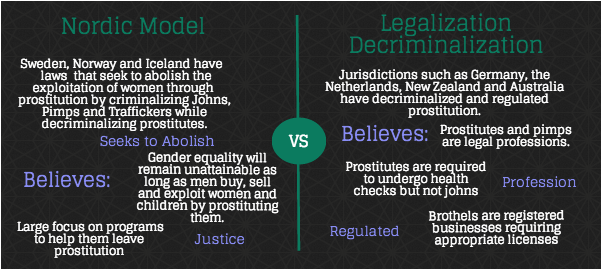
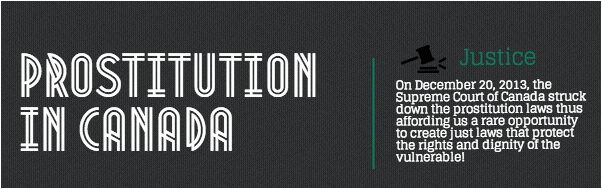
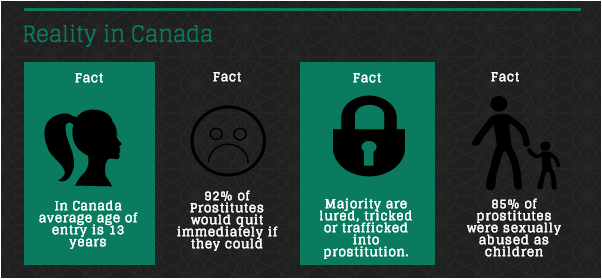
Last year the Supreme Court of Canada ruled that our prostitution laws are unconstitutional. The government has been given until December 2014 to draft new laws. The conservative government has been here before and ultimately committee recommendations to implement a Nordic (abolitionist) model were overlooked. Although the official deadline for public input was March, we can still influence the direction our country takes.

As for me, I’m an abolitionist. Here’s why:

abolition infographic

abolition 2

abolition 3

abolition 4

abolition 5

abolition 6

Infographic by: rethinklife.org

For more info or to get involved, check out:

The Women’s Coalition for the Abolition of Prostitution

Blogging

This has been a strange month for So Here’s Us. I’m all over the place.

On one hand is my usual fare, a poem for World Down Syndrome Day: I Am Me; another one for So-Overwhelmed-I’m-Losing-My-Mind Day (aka – almost every day): Sinking; and finally an introspective piece about things life is teaching me: Excuse Me While I Apologize for Living.

On the other hand, I’ve started a new series called What I Believe explaining our new life philosophy. It starts with a break-up letter to our beloved church: Confession Time and explains the biggest shift: From Certainty to Mystery. For those interested in spiritual matters, stay tuned for Embracing a Bigger Gospel and What is a Progressive Christian Anyway?

So here’s us, panting for spring and all the new beginnings that come with it.

Linking up with Leigh Kramer’s “What I’m Into” list.

 what I'm into

;